Pressure Washing in London

Pressure washing in London is a practical way to lift built-up dirt from hard outdoor surfaces, bringing patios, paths, walls, driveways and other weathered areas back to a cleaner, more usable condition. Our service focuses on controlled jet washing work for domestic and commercial exteriors, using the right approach for the material rather than forcing one method onto every surface. That matters when the goal is a thorough clean without unnecessary wear.
We handle exterior cleaning tasks that benefit from water pressure, surface knowledge and a careful finish. Different materials call for different techniques, so the work may involve adjusting pressure, working in sections, or choosing a cleaner that supports the result without leaving residue. Where useful, we can also discuss related outdoor cleaning needs such as patio cleaning, decking care and facade cleaning, helping customers choose the right service for the area that needs attention.
If you are comparing options and want a straightforward way to plan the work, use the pages below to look at specific services and practical information. You can review the details first, then decide what best suits the surface, access and level of staining. When you are ready, ask for a quotation and we can help you move from a dusty, stained finish to a cleaner one.
Jet washing for exterior surfaces
Jet washing is most effective when it is matched to the surface, the staining and the material beneath the dirt. Stronger pressure can remove moss, algae, surface grime and weather marks from many hard areas, but delicate finishes need a lighter touch. That is why sensible pressure washing is not just about power; it is about control, rinse quality and knowing when a cleaner or an extra pass will improve the result. We aim for a finish that looks clean without leaving stripes or patchy edges.
For many customers, the work begins with exposed surfaces that collect the most debris over time. Patio cleaning suits stone, paving and paved sitting areas where footfall, rain and shaded conditions leave a dull film. Decking services are useful where timber or composite boards need careful treatment, because the method has to respect the surface and the surrounding edges. Jet washing covers the broader external cleaning method itself, making it easier to match the process to the job.
Pressure washing can be part of routine maintenance or a one-off improvement before a sale, gathering, tenancy change or seasonal refresh. The key decisions are usually the surface type, the level of staining, the amount of loose debris and whether any sensitive joints, pointing or finishes need protection. Good preparation and the right pressure level matter just as much as the final rinse, because they help the clean last longer and reduce the chance of avoidable marks.
What the service can cover
Our pressure washing work can be arranged around several common outdoor cleaning tasks, and it is often more efficient to treat connected areas in one plan. Facade cleaning is suitable when walls, frontage details or external finishes need a more careful approach than open paving. Gutter cleaning deals with the build-up that can contribute to staining and overflow around the outside of a property. For customers with broader outside maintenance needs, window cleaning can complement the wash by improving the overall appearance of the building.
Where outdoor surfaces are weathered by pollen, traffic film, shade or heavy use, pressure washing can make a noticeable difference to how tidy the whole property feels. Not every area should be treated the same way, so the cleaner, nozzle choice and rinse pattern should be matched to the finish. That is especially important around pointing, render edges, decorative features, steps and transitions between materials. The better the match, the more even the result tends to be.
Useful jobs to consider alongside a pressure wash include:
- paths, paving and entrance routes
- walls, boundary features and outdoor hard landscaping
- decks, steps and seating areas
- areas affected by algae, mud, soot or general grime
How we approach a clean finish
Pressure washing is most effective when the surface is assessed before work begins. Loose debris, leaves, grit and built-up dirt can influence the result, so the process may start with a dry clear-down and a closer look at stains or worn patches. This helps reduce streaking and makes it easier to clean edges properly. It also allows the work to be paced so that water and cleaning solution are used efficiently rather than wasted on areas that need a different method.
For many exterior surfaces, the cleaner has to be balanced with the material. Harder stone, concrete and some paving can generally tolerate a firmer clean, while timber, older pointing and more decorative finishes call for restraint. In practice, that means working in a controlled way, watching how the water behaves and avoiding unnecessary repetition. A strong result comes from careful technique as much as from the machine itself.
Where there is heavier staining, a sensible pressure wash may include pre-treatment, a dwell period and a rinse that removes loosened grime fully. The aim is not to strip away the surface character, but to improve the appearance of the area in a way that still suits the property. If the surface has a particular finish or a vulnerable edge, that should be part of the plan from the start rather than discovered halfway through the job.
Outdoor areas and adjoining services
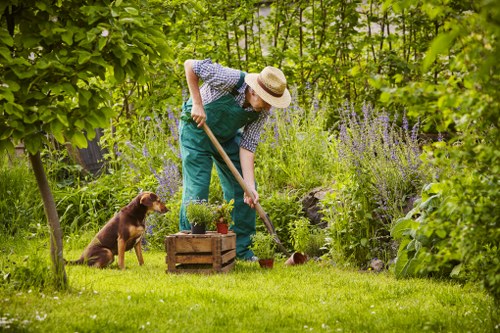
![A woman wearing a yellow top, teal gardening apron, and gloves is working in a garden bed, tending to pink flowering plants. The garden features a lush green lawn with dense shrubbery and trees in the background, indicating a well-maintained outdoor space. The soil around the plants appears moist and healthy, with the flowering plants displaying vibrant pink blossoms. The scene is outdoors, under natural daylight, with a garden shed and a variety of greenery visible behind her, suggesting a neat and organized garden layout suitable for regular landscaping and outdoor maintenance services. This setting reflects typical garden care activities that pressure washing and garden landscaping companies like Pressure Washing London support with their services, enhancing the appearance and health of outdoor spaces in the local area near postcode SW.]](/pub/_photos/gardening/f1407320064.jpg)
Many customers looking for pressure washing also want related outdoor cleaning or maintenance support. House clearance is a separate service, but it can matter where exterior items, stored materials or bulky clutter affect access to patios, yards or side returns. Garden clearance helps when overgrowth, soil, cuttings or general debris are making it harder to see the surfaces that need attention. If the overall outdoor area needs a broader tidy-up, garden services may be relevant as part of a wider maintenance plan.
The pressure washing itself is still the core of this page, but it is useful to think about the setting around it. A clean hard surface can look unfinished if nearby edges are untidy, while a well-kept border or clear route can make the result feel more complete. For that reason, some customers choose to combine external washing with garden work or other practical property upkeep. The choice is usually about convenience, timing and how much of the outside space needs attention at once.
We keep the focus on the area that needs cleaning and the result the customer wants to achieve. Sometimes the best approach is a targeted wash on a single surface; at other times, the cleaner outcome comes from addressing several adjoining hard areas together. The most suitable plan depends on access, the amount of dirt and whether the surface is best cleaned on its own or alongside nearby features that are also in use.
Choosing the right pressure for the job
Pressure washing works best when the method is chosen for the finish, not the other way round. Surfaces that have deep-set grime may need a more intensive clean, while sensitive finishes may only need a light wash to avoid damage. This is where experience with the material matters. A clean that is too aggressive can leave marks, while one that is too weak may simply move the dirt around. The aim is a balanced result with consistent coverage.
Some surfaces respond well to a more direct jet wash, while others benefit from a wider spray, a lower setting or a combination of treatment and rinse. The condition of the area also matters. Old staining, algae growth, weathered joints and uneven texture all affect how the water behaves. When the approach is chosen well, the surface should look cleaner without an obvious pattern, bright striping or missed edges. That consistency is often what makes the difference between a rushed wash and a proper one.
For customers deciding what to include, it can help to think in terms of the surface first and the service name second. A patio, driveway, wall or deck each has different needs, and the same machine setting will not suit them all. If you are uncertain, the safest route is usually to describe the material and the visible build-up so the work can be matched properly. Accuracy at the start often saves time later.
Common surfaces and practical choices
Pressure washing can be adapted to a wide range of outdoor surfaces, especially where dirt has settled into the texture of the material. Paving, stone, blockwork, concrete and some timber features can often be improved significantly with a controlled clean. The more textured the surface, the more attention is usually needed around joints, grooves and edges. That is why a one-size-fits-all method is rarely the best choice for exterior washing.
In many cases, customers are most interested in the visible improvement to the main approach areas of a property. A cleaner path, driveway, terrace or entrance can change the overall impression quickly. But the right result is not only about appearance; it is also about removing the slippery or unsightly build-up that tends to collect outdoors. Where needed, the work can be planned to focus on the parts that are most heavily used, most visible or most affected by the weather.
When deciding what to include, think about which surfaces are most likely to benefit from a wash now and which could wait. Areas in constant shade, spaces near planting, and surfaces with regular foot traffic tend to show dirt sooner. A sensible plan gives priority to the sections that will make the biggest difference while still keeping the work manageable. That keeps the service clear, practical and easy to compare.
About London
London is a large, layered city shaped by the River Thames and by centuries of growth from Roman settlement to modern global metropolis. The Square Mile remains the historic core of the financial district, while the West End is known for theatres, retail streets and a dense pattern of Georgian and later development. Across the river and beyond the centre, many districts retain distinct identities formed by former villages, parish boundaries and later suburban expansion. This patchwork is visible in the street pattern as well as in the architecture, with terraces, mansion blocks, civic buildings and post-war estates all appearing within a relatively short distance of each other. Major landmarks include the Palace of Westminster, St Paul’s Cathedral, the Tower of London and the Royal Parks, each of which reflects a different stage in the city’s development. The Thames remains a defining feature, crossed by historic bridges and lined by embankments, wharves and riverside walks. Museums, galleries, markets and music venues add to the city’s public life, while transport corridors such as the Underground, Overground and rail network tie the many parts together. Despite its scale, London still contains pockets of village-like character, from leafy commons and conservation areas to dense commercial streets and waterside quarters, creating a city that is both historic and constantly changing.
If you want a clearer picture of the work or the likely scope for a property, it can help to look at the service pages that match the surface type most closely. That way you can compare the options calmly and decide what needs attention first. When you are ready, ask for a quotation and we will take the next step with you.
Planning the work and keeping it straightforward
When arranging pressure washing, the most helpful information is usually simple and specific: which surfaces need cleaning, how large the areas are, and whether there are any access limitations or delicate features nearby. Photographs can be useful where the staining is unclear, or where a surface has mixed materials and needs a more tailored approach. This helps the work be planned accurately and avoids unnecessary back-and-forth over what should be included.
It is also sensible to think about how the job fits around the rest of the property. If the area contains furniture, planters, stored items or vehicles, these may need to be moved so the surface can be cleaned evenly. In some cases, a clear route to the area makes the work simpler and the result more consistent. We keep the process practical and focused on the surface itself, rather than turning it into a long checklist.
For pricing and quoting, the main factors are usually the size of the surface, the level of build-up, the surface material and any extra care needed for fragile edges or awkward access. If you are comparing options, pricing and quotes gives a useful place to start, while contact us is the best route when you are ready to request a quotation for the work you need.
Pressure washing with a clear result
Good pressure washing should leave the surface looking fresher without overworking it. That means using enough force to remove grime, but not so much that the material is left looking uneven. It also means taking the time to rinse properly, because lingering dirt or cleaner can spoil an otherwise good result. The best finish is usually even, natural-looking and suited to the age and texture of the surface rather than artificially bright.
Customers often appreciate a service that is direct about what it can do. Pressure washing is well suited to many hard exterior areas, but it is not the answer to every outdoor issue. If the surface is damaged, crumbling or badly worn, the work may need to be adapted rather than pushed harder. That practical approach helps preserve the underlying material while still improving the overall appearance. It also makes it easier to decide which areas are best cleaned now and which should be left until later.
To keep things simple, start with the main surface that needs attention, then add any closely connected areas that would benefit from the same treatment. You can read more about relevant services, compare options and make a clear decision before getting in touch. If you already know what you need, ask for a quotation today.