Fulham Road upholstery cleaning guide London
If you live, work, or spend a lot of time around Fulham Road, you will know how quickly upholstered furniture can start to look tired. One rainy commute, a coffee spill, a bit of city dust, and suddenly the sofa that once felt calm and welcoming looks a little grey around the edges. This Fulham Road upholstery cleaning guide London is here to make the whole process clearer, calmer, and far more practical. You will learn what upholstery cleaning really involves, how the methods differ, what to avoid, and how to decide whether a careful DIY refresh or a professional clean makes the most sense.
Truth be told, most people wait too long. Then they try to remove a stain in a rush. That rarely ends well. Let's do it properly instead.
Table of Contents
- Why Fulham Road upholstery cleaning guide London Matters
- How Fulham Road upholstery cleaning guide London Works
- Key Benefits and Practical Advantages
- Who This Is For and When It Makes Sense
- Step-by-Step Guidance
- Expert Tips for Better Results
- Common Mistakes to Avoid
- Tools, Resources and Recommendations
- Law, Compliance, Standards, or Best Practice
- Options, Methods, or Comparison Table
- Case Study or Real-World Example
- Practical Checklist
- Conclusion
- Frequently Asked Questions
Why Fulham Road upholstery cleaning guide London Matters
Upholstery cleaning matters because fabric furniture is one of the hardest-working parts of a home or workplace. Sofas, armchairs, dining seats, headboards, and banquettes collect dust, body oils, food crumbs, pet hair, pollen, and the odd mystery mark. On Fulham Road, where many homes are busy, compact, and beautifully lived-in, that wear shows up fast.
There is also a simple comfort factor. Clean upholstery changes the feel of a room in a way people often notice before they can explain it. The fabric smells fresher. The colour looks brighter. The room feels less heavy. You know that moment when you sit down and actually think, "ah, that's better"? That is what a proper clean can do.
It also matters for preservation. Fabrics degrade faster when grit and oils are left to build up. A light regular clean can help prevent fibres from matting down and stop stains from settling deep into the weave. That said, not every item needs the same treatment. A velvet chair in a south-facing sitting room, for example, is a very different job from a hard-wearing family sofa in a busy flat.
For local residents, there is one more angle: London life is unforgiving on soft furnishings. Open windows near traffic, wet shoes in hallways, takeaway spills after a long day, and higher indoor dust in older buildings all add up. So a sensible upholstery routine is not luxury. It is maintenance, plain and simple.
How Fulham Road upholstery cleaning guide London Works
At a practical level, upholstery cleaning works by loosening and removing soil from fabric and padding without damaging the material. The exact method depends on the fabric type, the construction of the furniture, and the condition of the piece.
Most cleaning follows a familiar sequence:
- Inspection - checking the fabric, labels, stains, wear, and any risk areas.
- Dry soil removal - vacuuming crumbs, dust, and loose debris from seams, edges, and under cushions.
- Pre-treatment - applying a suitable solution to stains or high-traffic areas.
- Agitation - working the product gently into the fibres where needed.
- Extraction or wiping - removing soil and residue using the relevant method.
- Drying - allowing airflow so the upholstery dries fully and evenly.
The tricky part is that upholstery is not just fabric. There may be foam, springs, webbing, trim, adhesive, and delicate stitching underneath. If you use too much liquid or the wrong cleaner, you can leave watermarking, cause shrinkage, or push dirt deeper into the cushion. Nobody wants a sofa that looks cleaner but feels damp for two days. Not ideal.
Common methods include low-moisture cleaning, hot water extraction on suitable fabrics, dry cleaning techniques for sensitive materials, and targeted stain treatment. A good cleaner will choose the method based on the label, the fibre, and the risk. That judgement matters more than the machine itself, to be fair.
Key Benefits and Practical Advantages
The best reason to clean upholstery is obvious: it looks and feels better. But the practical benefits go further than appearances.
- Improved hygiene: Upholstery can trap dust, allergens, and everyday grime.
- Longer fabric life: Regular care reduces abrasive dirt that wears down fibres.
- Better indoor comfort: Fresh fabric makes a room feel lighter and more welcoming.
- Stain control: Fresh spills are easier to deal with before they become permanent.
- Odour reduction: Furniture can hold cooking smells, pet odours, and general stale air.
- Better presentation: Useful for landlords, hosts, offices, and anyone who has visitors often.
There is also a quiet psychological benefit. A clean sofa can make the whole room feel less cluttered, even if the room itself has not changed. People underestimate that. You glance at the armchair, the cushions look refreshed, and the room seems to breathe a little.
For commercial settings near Fulham Road, presentation and first impressions matter even more. Waiting areas, private offices, clinics, studios, and short-let spaces all benefit from furnishings that look cared for rather than merely tolerated.
Who This Is For and When It Makes Sense
This guide is useful for anyone with upholstered furniture, but it is especially relevant if you are dealing with one of these situations:
- You have noticeable staining or patchy marks on a sofa or chair.
- The furniture smells slightly musty, stale, or pet-like.
- There is visible wear along the arms, seats, or headrest area.
- You have moved into a new property and want a clean reset.
- You are preparing a flat, house, or office for guests, tenants, or clients.
- You own delicate fabric furniture and do not want to damage it with guesswork.
It also makes sense after a spill, especially if it is something likely to leave a residue: coffee, red wine, sauces, makeup, or muddy water. The sooner you act, the better. Time is annoying that way.
If your furniture is antique, heavily textured, or made from a fabric like silk, viscose blend, or certain velvets, extra caution is sensible. In those cases, the wrong cleaning approach can flatten the pile or alter the finish. Sometimes the safest decision is simply to test a tiny hidden patch first. Small step, big difference.
Step-by-Step Guidance
Here is a practical way to think about upholstery cleaning without getting lost in jargon.
1. Identify the fabric
Check the care label if the item has one. It may indicate whether the fabric can handle water-based cleaning, solvent-based cleaning, or only gentle vacuuming and spot treatment. If the label is missing, use caution and test discreetly.
2. Vacuum thoroughly
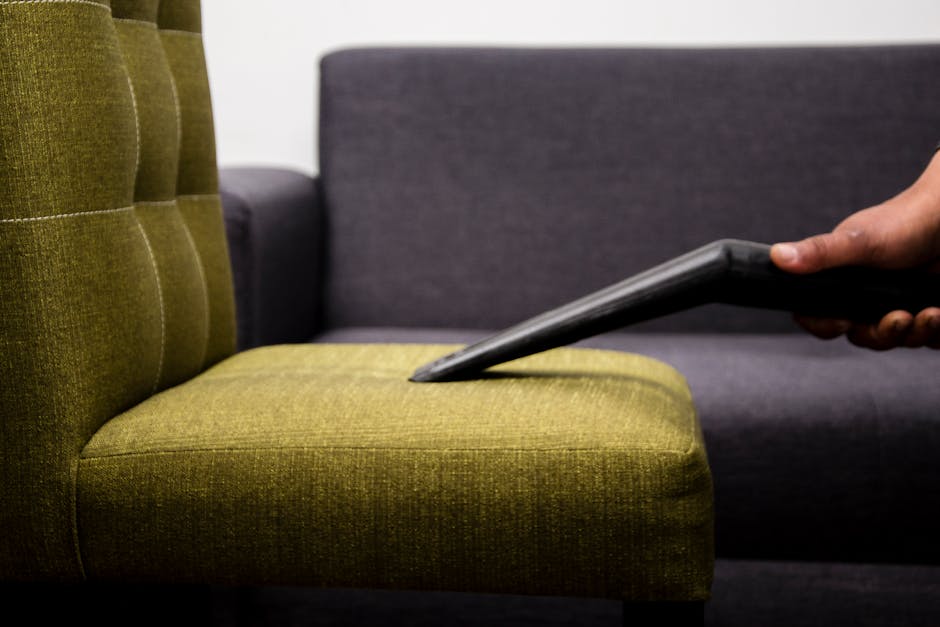
Use a vacuum with a upholstery attachment. Get into seams, creases, and under cushions. This removes loose grit that can turn into muddy slurry if you wet the fabric too soon.
3. Spot test first
Always test any cleaner on a hidden area. Leave it long enough to see whether there is colour transfer, texture change, or shrinkage. A few minutes here can save a very expensive mistake later.
4. Treat stains separately
Different stains need different treatment. Grease behaves differently from tannin stains, and pet accidents need more than fragrance cover-up. The point is to target the mark rather than bathing the whole chair in product and hoping for the best.
5. Clean the full panel or section
When you clean one visible area, feather the cleaning into the surrounding fabric so the finish stays even. This helps avoid patchiness. Uneven cleaning is one of those things you do not notice while you are working, then it stares back at you in daylight.
6. Remove residue
Residual detergent can attract dirt, so proper extraction or wiping matters. If you skip this, the fabric can re-soil more quickly. That is a frustrating loop and easy to avoid.
7. Dry fully
Airflow is your friend. Open windows if suitable, use fans if appropriate, and avoid sitting on the furniture until it is properly dry. Some fabrics feel dry on the surface while the padding underneath still holds moisture.
8. Finish with a final check
Look at the fabric from different angles. Natural light tells the truth faster than any indoor lamp. You will often spot missed marks, leftover dampness, or slight texture changes at this stage.
Expert Tips for Better Results
A few practical habits make a big difference. They are not glamorous, but they work.
- Clean before the stain gets old. Fresh marks are far easier to remove than dried-in ones.
- Work from the outside of a stain inward. This reduces spreading.
- Do not oversaturate. More liquid does not mean better cleaning.
- Use white or colourfast cloths. You do not want dye transfer from a cleaning rag.
- Lift, do not rub. Aggressive rubbing can distort the pile and push the stain deeper.
- Control the room climate. Warm, moving air helps drying, but intense heat can be a problem for some fabrics.
- Deodorise after cleaning only if needed. Heavy fragrances can mask, not solve, odour issues.
One small but useful tip: if your sofa has loose cushions, clean them separately and rotate them after drying. It sounds obvious, yet people often forget. The centre cushion always gets the most action, doesn't it?
If you are cleaning a chair or sofa in a London flat with limited ventilation, plan the job for a time when you can leave airflow running for a few hours. Early afternoon often works better than late evening, especially in damp weather. Small detail, but it helps.
Common Mistakes to Avoid
Most upholstery damage comes from rushing. Here are the mistakes that cause the most trouble.
- Using the wrong product: Some cleaners are far too harsh for delicate fabrics.
- Skipping the spot test: This is how colour loss and rings happen.
- Soaking the furniture: Excess water can damage foam and backing materials.
- Using too much detergent: Residue attracts dirt and leaves a sticky feel.
- Scrubbing hard: This can flatten texture, fuzz the surface, or spread the stain.
- Ignoring drying time: Wet padding can smell musty and stay damp longer than expected.
- Mixing products: A bad idea almost every time. In fact, just don't.
Another common problem is trying to make a stain disappear in one pass. Realistically, some marks need repeated gentle treatment, and some should be left to a professional once you see how deep they have gone. Pushing harder is not the same as solving the issue.
Tools, Resources and Recommendations
You do not need a truck full of kit to look after upholstery, but the right tools help a lot.
| Tool or product | Best use | Why it helps |
|---|---|---|
| Upholstery attachment vacuum | Routine cleaning | Removes dust and grit from seams and cushions |
| Soft-bristled brush | Gentle agitation | Lifts soil without harsh abrasion |
| Microfibre cloths | Spot treatment and wiping | Absorbent, low-lint, and easy to control |
| Clean white towels | Blotting and drying | Useful for seeing transfer and controlling moisture |
| Fabric-safe cleaner | Targeted stain treatment | Helps break down marks without damaging fibres |
| Air mover or fan | Drying | Speeds up evaporation and reduces damp smells |
If you want broader home maintenance support, services such as deep cleaning, carpet cleaning, and rug cleaning are often considered alongside upholstery care because they affect the same room environment. A sofa can be spotless, but if the carpet is dusty and the rug smells stale, the result feels incomplete.
For local property care, it may also help to keep an eye on related upkeep such as window cleaning for brighter rooms or one-off cleaning when you need a full reset before visitors arrive. The details stack up, rather annoyingly, but they do make a difference.
Law, Compliance, Standards, or Best Practice
Upholstery cleaning is not usually a heavily regulated activity in the way some specialist trades are, but there are still important best practices to follow. If you hire a cleaning provider, you should expect sensible precautions around fabric identification, product handling, and safe working methods.
In the UK context, good practice typically means:
- Using suitable cleaning products for the specific textile and finish.
- Following manufacturer guidance where available.
- Working safely around electrical items, sockets, and moisture.
- Using reasonable care to protect surrounding floors, walls, and furnishings.
- Handling waste water and cleaning residue responsibly.
- Being clear about exclusions, limitations, and likely drying times.
For business settings, especially offices or hospitality spaces, it is sensible to think about access, occupancy, and slip risk while furniture is drying. You do not want a wet patch in a reception area at 9 a.m. if people are walking through with coffee cups. Common sense, really, but worth stating.
If you are choosing between doing it yourself and hiring help, look for clarity on pricing, insurance, and what the service includes. The useful pages to review are pricing and quotes, insurance and safety, and about us if you want to understand the service approach before booking. That kind of transparency builds trust fast.
If you care about product residues, indoor comfort, or responsible disposal, recycling and sustainability is also worth a look. Not every cleaning decision is dramatic, but a thoughtful one does feel better.
Options, Methods, or Comparison Table
There is no single "best" upholstery cleaning method. The right one depends on the fabric, stain type, and time you have available. Here is a simple comparison.
| Method | Best for | Pros | Watch-outs |
|---|---|---|---|
| Vacuuming and spot care | Light maintenance | Quick, inexpensive, low risk | Won't remove deep soil or old stains |
| Foam or low-moisture cleaning | General fabric upkeep | Less water, faster drying | May be less effective on heavy contamination |
| Hot water extraction | Suitable durable fabrics | Deep cleaning action, good soil removal | Too much moisture for delicate materials |
| Dry or solvent-based cleaning | Sensitive textiles | Useful where water is risky | Needs correct product choice and technique |
| Professional treatment | Stubborn stains, valuable pieces, delicate fabrics | More expertise, better risk control | Higher upfront cost than DIY |
If you are unsure, choose the least aggressive method that still matches the problem. That is a good rule across most fabric care, not just here. A light touch often wins.
Case Study or Real-World Example
Imagine a family living just off Fulham Road with a two-seat sofa in a pale woven fabric. Over time, it picks up everyday marks: snack crumbs, a faded tea ring on one cushion, and a faint smell from the dog jumping up after walks. Nothing dramatic. Just enough to make the room feel a bit tired.
The first instinct is usually to scrub the tea mark with whatever is under the sink. That can be risky. Instead, a better approach would be:
- Vacuum thoroughly, especially around seams and under the cushions.
- Check the fabric label and test a hidden patch.
- Target the tea mark with a fabric-safe cleaner and blot rather than rub.
- Lift pet hair and surface dirt from the arms and backrest.
- Dry the sofa with windows open and airflow moving.
- Reassess after full drying before deciding if a second treatment is needed.
In a real home, the result is rarely dramatic in a theatrical way. It is quieter than that. The sofa simply looks fresher, the room smells cleaner, and the fabric no longer feels as though it is holding onto the week. That is usually the point. Not perfection. Better. Much better.
For more complex or broader property care, a householder might combine upholstery work with domestic cleaning or a more detailed after builders cleaning if renovation dust has settled everywhere. Sometimes the furniture is not the only thing that needs attention, let's face it.
Practical Checklist
Use this checklist before you start.
- Identify the fabric type and check the care label if available.
- Inspect for stains, wear, loose seams, or colour sensitivity.
- Vacuum all visible surfaces and hidden creases.
- Test any cleaner in a hidden area first.
- Prepare clean cloths, towels, and a gentle brush.
- Work on one section at a time.
- Blot, do not scrub.
- Avoid saturating the filling underneath.
- Allow proper drying with airflow.
- Recheck the item in natural light once dry.
If the furniture is expensive, antique, heavily stained, or made from a delicate fabric, pause before taking a DIY risk. Some items deserve a more careful, experienced hand. No shame in that at all.
Expert summary: the safest upholstery cleaning strategy is usually the one that matches the fabric, uses the least moisture needed, and leaves the material fully dry before use. Small steps, done properly, are what protect furniture over time.
Get a free quote today and see how much you can save.
Conclusion
Good upholstery care is not really about chasing perfection. It is about keeping the furniture you already own cleaner, fresher, and more comfortable for longer. On Fulham Road, where homes and businesses are often busy and close to the rhythm of the city, that kind of care pays off in everyday life.
If you remember only three things, make them these: know your fabric, use the gentlest effective method, and let the item dry fully. Do those three well and you avoid most of the common headaches. Simple, but not always easy. Still, worth it.
And if you want help beyond a quick surface refresh, choosing a reliable local service can save time and prevent costly mistakes. A well-cared-for sofa changes the feel of a room more than people expect. Quietly, steadily, it just makes life nicer.
Frequently Asked Questions
How often should upholstery be cleaned in a London home?
For most homes, light vacuuming should happen regularly, with deeper upholstery cleaning every so often depending on use. Busy family homes, pet owners, and high-traffic rooms usually need attention more often than a spare room sofa.
Can I clean all upholstery fabrics the same way?
No. Different fabrics react differently to water, detergent, heat, and agitation. Cotton, linen, synthetics, velvet, and mixed fibres each need their own approach. If you are unsure, test first and use the least aggressive method that still works.
What is the safest way to remove a fresh stain from a sofa?
Blot the spill immediately with a clean cloth, work from the outside in, and avoid rubbing hard. Then use a fabric-appropriate cleaner after spot testing. Quick action helps, but rushing with the wrong product can make things worse.
Is steam cleaning suitable for upholstery?
Sometimes, but not always. Steam or hot water extraction can be effective on durable fabrics, yet it is not suitable for every material. Delicate textiles may shrink, distort, or hold too much moisture. Fabric type matters more than the gadget.
How long does upholstery take to dry?
Drying time varies with fabric, room ventilation, moisture level, and the cleaning method used. Lightweight pieces may dry fairly quickly, while thick cushions or padded arms can take longer. Good airflow makes a big difference.
Will upholstery cleaning remove pet odours?
It can help a great deal, especially if odour is coming from surface soil or fabric residue. Stronger odours may need a deeper treatment because smells can settle into the padding as well as the outer fibres.
Can old stains be removed completely?
Sometimes yes, sometimes no. It depends on what caused the stain, how long it has been there, and whether previous cleaning attempts have altered the fabric. Older marks are more stubborn, so expectations should stay realistic.
Is professional upholstery cleaning worth it?
It often is if the fabric is delicate, the stains are stubborn, or you simply do not want to take a risk. A professional can choose the right method, reduce damage risk, and save you time. For valuable furniture, that reassurance alone can be worth it.
What should I do before a cleaner arrives?
Clear nearby clutter, remove loose items from the sofa, point out problem spots, and mention any past cleaning attempts or fabric concerns. The more the cleaner knows, the better the result tends to be. Simple courtesy, but very useful.
Are there any fabrics I should never wet clean?
Some delicate or specialty fabrics should not be wet cleaned without careful assessment. If the label is unclear or the item is valuable, proceed cautiously. When in doubt, a small hidden test is the least risky place to start.
Does upholstery cleaning help with allergies?
It can help reduce the amount of dust and other particles held in fabric, which may improve indoor comfort for some people. It is not a medical treatment, of course, but fresher furnishings can contribute to a cleaner-feeling room.
What is the main mistake people make with sofa cleaning?
The biggest mistake is usually using too much liquid or scrubbing too hard. Both can damage the fabric or leave marks that are harder to fix than the original spill. Gentle, controlled cleaning wins more often than heroic effort.